Building the Foundation for High-Integrity Biodiversity Credit Pilots

Translating global biodiversity credit frameworks into locally legitimate, community-led pilots with BC First Nations.

A Critical Moment for Nature Finance in BC

Voluntary biodiversity credits are emerging as a complementary nature finance mechanism, designed to reward measurable conservation outcomes. British Columbia is uniquely positioned — strong policy momentum behind Indigenous-led conservation, alignment with the Tripartite Framework Agreement on Nature Conservation, and diverse ecosystems ready to support pilot projects.

A 2025 national roundtable co-hosted by the Nature Investment Hub and IISD identified "supporting Indigenous-led pilot projects" as one of three Quick Wins needed before 2030 to advance biodiversity credits in Canada — and specifically cited the Savimbo ISBM as a leading example of how Indigenous Peoples can design and lead biodiversity credit systems from the ground up.

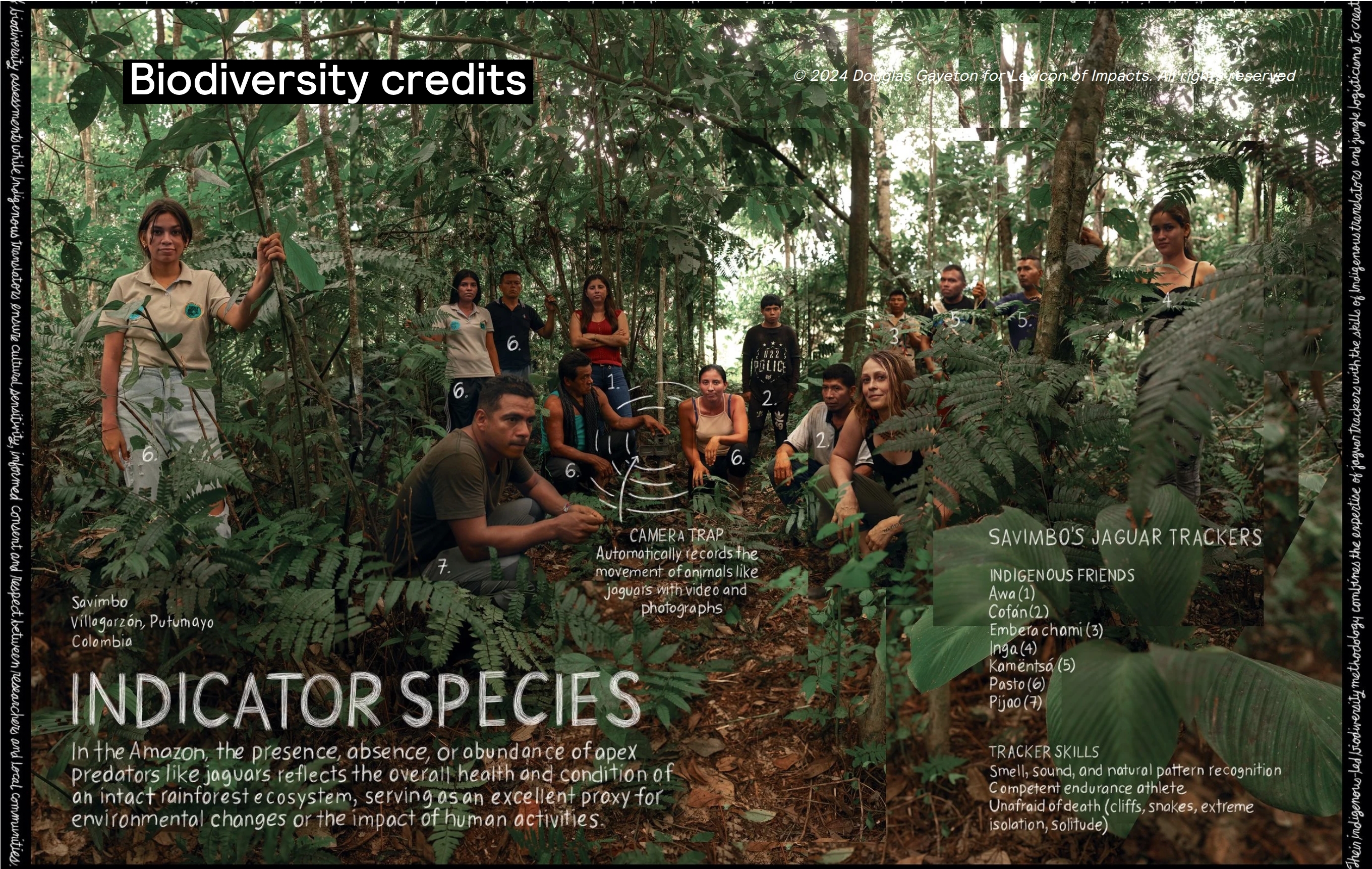
Savimbo Indicator Species Biodiversity Methodology (ISBM)

The Savimbo ISBM was created by Indigenous stewards in the Colombian Amazon working with scientists and community leaders to design a biodiversity monitoring and credit system that centres Indigenous knowledge, governance, and priorities. Savimbo ISBM-based projects are the first in the world to issue biodiversity credits certified under the Cercarbono Biodiversity Certification Programme (CBCP).

"This methodology relies on indicator species. A simple but powerful concept: certain species of flora and fauna can survive only in functional ecosystems. A healthy specimen in the wild is a scientifically valid indicator that the ecosystem is functionally intact. Proving the existence of indicator species using non-invasive monitoring techniques (such as game cameras, photographs, or audio recordings), respects the wildlife and can be easily, and immediately implemented on the ground by IP and LC groups within traditional hunter-gatherer contexts."— Savimbo, isbm.savimbo.com

Our Approach: Four Steps

1

Outreach & Engagement

Targeted, relationship-first outreach with BC Nations. Balanced, pressure-free workshops on biodiversity credits, nature finance, and ISBM.

2

Baseline Development

BC-wide ISBM-aligned baseline framework: ecosystem categorization, drivers of biodiversity loss, and indicator species database crosswalked to SARA listings.

3

Co-Design with Nations

Nation-specific governance frameworks, theories of change, data sovereignty protocols, and community-endorsed pilot concepts — co-designed at every stage.

4

Pilot Proposal Support

Co-development of tailored funding proposals for Nations choosing to proceed, targeting federal, provincial, philanthropic, and nature finance sources.

Current Work: Readiness & Engagement Phase

We are currently in a readiness and engagement phase in British Columbia. Technical work underway includes preliminary ecosystem categorization and indicator species integrity scoring for the Similkameen Valley, development of workshop and community consultation materials, and drafting of an OCAP®-aligned data sovereignty governance framework.

We are actively seeking funding from First 30x30 Canada and aligned philanthropic partners to support the full scope of this readiness phase, covering 12–18 months of outreach, baseline development, and co-design with 2–4 partner Nations.

Connect With Us